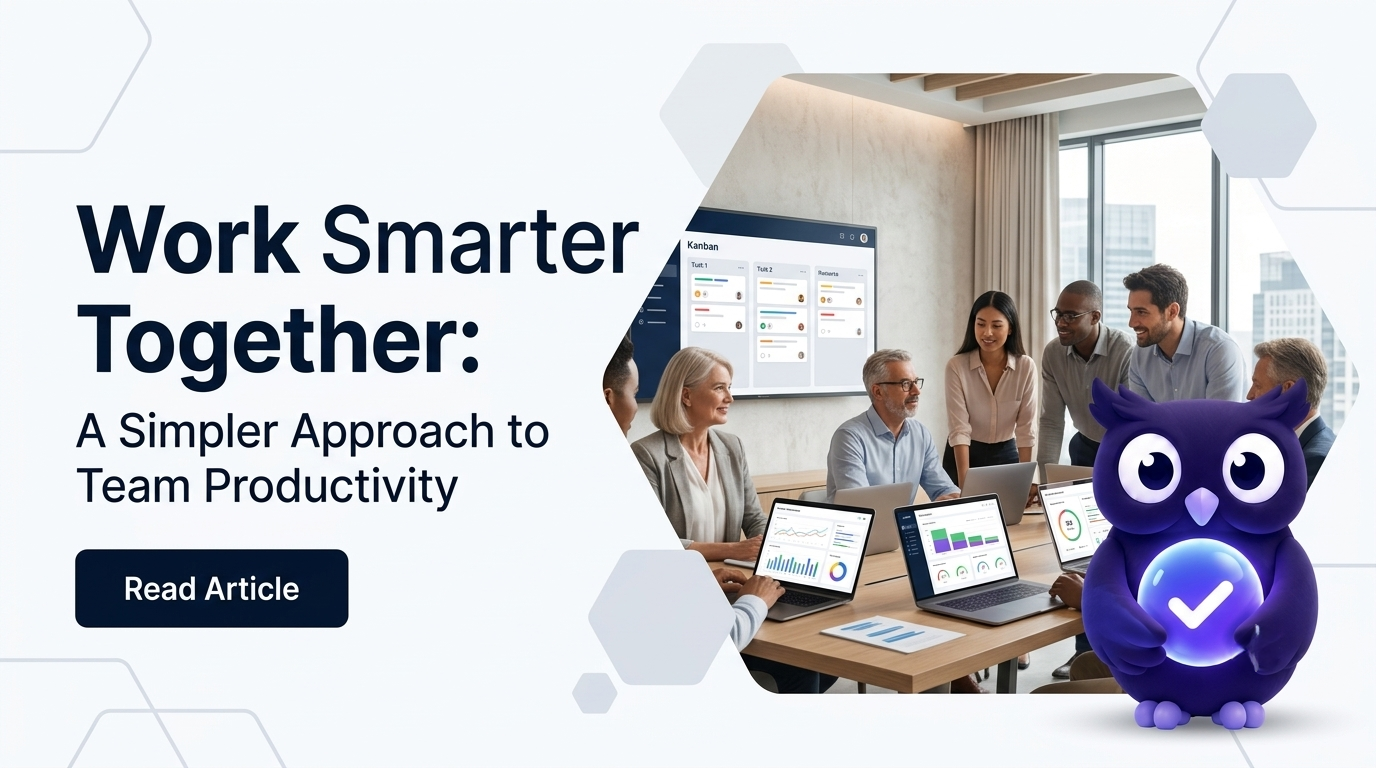
Remote work has permanently changed how businesses operate. What started as a temporary solution has evolved into a long-term workforce strategy for companies worldwide. Organizations now manage employees across different cities, countries, and time zones while maintaining daily operations through digital collaboration tools.

While remote work offers flexibility and access to global talent, it also introduces serious management challenges. Many companies struggle with communication gaps, inconsistent workflows, employee accountability, and declining productivity when teams are not physically together.
The truth is that remote team management can either improve business performance or create operational chaos depending on the systems and strategies companies use.
Businesses that succeed with remote work often rely on structured processes, clear communication, and intelligent remote work management software that helps teams stay aligned and productive.
MyTaskOwl is designed to help organizations simplify remote operations through AI-powered workforce management, productivity monitoring, task organization, and attendance tracking. As a modern remote workforce management platform, MyTaskOwl helps businesses improve management alignment, support remote collaboration, and optimize employee productivity.
Understanding what works — and what doesn’t — is essential for companies that want to build successful remote teams.
What Works in Remote Team Management
Remote work can be highly effective when businesses create structure, transparency, and operational consistency. Companies that invest in the right systems often experience increased employee satisfaction, better flexibility, and improved productivity.
Here are some of the most effective remote management strategies.
1. Centralized Communication and Task Management
One of the biggest reasons remote teams fail is fragmented communication. Employees often use multiple apps, emails, spreadsheets, and chat platforms that create confusion and disconnect workflows.
Successful remote organizations use centralized systems where employees can manage tasks, deadlines, updates, and communication from one place.
A powerful remote workforce management platform helps teams:
- Track assignments clearly
- Monitor project progress
- Share updates in real time
- Reduce communication delays
- Improve workflow transparency
- Align departments more effectively
MyTaskOwl simplifies this process by providing a centralized dashboard where employees and managers can collaborate without constantly switching between tools.
When everyone has visibility into priorities and responsibilities, remote operations become significantly more organized.

2. Strong Management Alignment
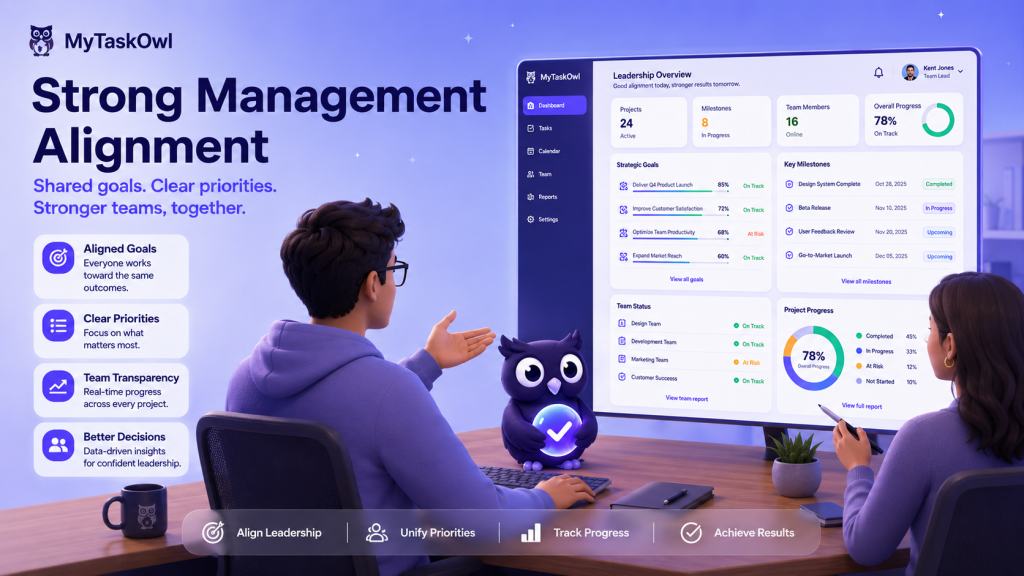
One of the most overlooked parts of remote work success is management alignment.
When leadership teams are not aligned on priorities, communication, or expectations, employees receive inconsistent direction. This creates confusion, delays, and productivity issues across departments.
Strong management alignment means:
- Clear business goals
- Consistent communication
- Transparent expectations
- Defined responsibilities
- Unified leadership strategies
Remote employees need clarity more than constant supervision. Businesses that communicate priorities clearly often build more productive and motivated teams.
MyTaskOwl helps improve management alignment by creating a transparent digital workspace where project visibility, task organization, and workforce analytics are accessible in real time.
3. Productivity Support Instead of Micromanagement

One major mistake businesses make with remote teams is over-monitoring employees.
Excessive check-ins, constant tracking, and unnecessary meetings often reduce morale and hurt performance instead of improving it.
What actually works is creating systems that support employee organization and accountability while allowing flexibility.
MyTaskOwl improves productivity by helping employees stay focused through:
- AI-powered task organization
- Smart reminders
- Workflow automation
- Deadline prioritization
- Real-time progress tracking
The platform’s AI assistant, Ollie, acts as a productivity companion that helps employees manage workloads more effectively without overwhelming supervision.
Businesses that focus on support rather than control often create healthier and more productive remote work environments.
4. Attendance Tracking for Remote Teams
Attendance management becomes more complicated when employees work remotely. Managers need visibility into schedules and availability, but traditional attendance systems are often ineffective for distributed teams.
This is why businesses are increasingly adopting intelligent attendance tracking for remote teams.
Effective attendance systems should:
- Track work hours accurately
- Support flexible schedules
- Improve accountability
- Reduce manual reporting
- Maintain workforce visibility
MyTaskOwl provides integrated attendance tracking and workforce monitoring tools that help organizations maintain operational structure while supporting remote flexibility.
Accurate attendance visibility also improves project planning, scheduling, and workforce coordination.
5. Workflow Automation
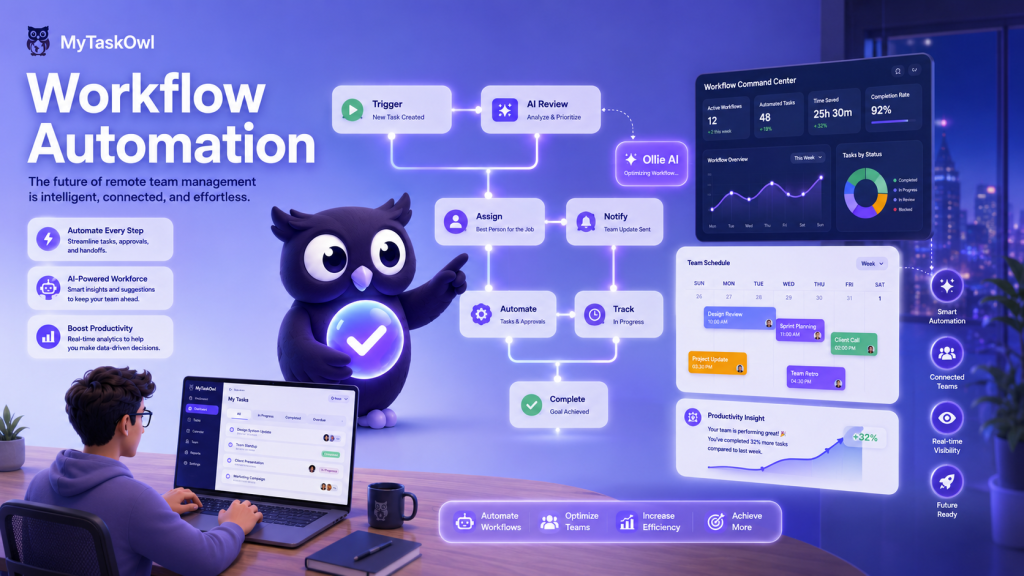
Manual administrative work slows down remote teams significantly. Repetitive processes, scattered updates, and unnecessary follow-ups create operational bottlenecks.
Automation helps remote teams operate more efficiently by reducing administrative overload.
Businesses that automate workflows often improve:
- Task coordination
- Deadline management
- Team communication
- Attendance notifications
- Productivity reporting
- Scheduling processes
MyTaskOwl uses AI-powered automation to streamline workforce management and simplify daily operations.
Automation not only saves time but also reduces the risk of communication gaps and missed deadlines.
What Doesn’t Work in Remote Team Management
Understanding common remote management mistakes is equally important for long-term success.
Many organizations struggle with remote work because they rely on outdated management habits that are ineffective in digital environments.
1. Constant Micromanagement
Micromanagement is one of the fastest ways to reduce employee morale and productivity.
When employees feel constantly monitored, they often become disengaged and less motivated. Remote teams need structure and accountability, but they also need trust and autonomy.
Businesses should focus on results, workflow visibility, and communication instead of excessive oversight.
2. Too Many Meetings
Many remote organizations overcompensate for physical distance by scheduling endless virtual meetings.
Unfortunately, excessive meetings reduce productivity and interrupt focused work time.
Successful remote teams prioritize:
- Clear documentation
- Organized task management
- Efficient communication
- Scheduled collaboration windows
Using workforce management platforms helps reduce unnecessary meetings by centralizing updates and project visibility.
3. Poor Communication Systems
Relying solely on emails or disconnected communication tools often creates delays and confusion.
Without centralized collaboration systems, employees may miss updates, duplicate tasks, or lose track of project priorities.
This is why integrated workforce management platforms are essential for remote operations.
4. Lack of Performance Visibility
Remote teams cannot function effectively without visibility into workflows and productivity.
Managers need access to workforce insights, attendance data, and project progress to make informed decisions.
However, visibility should focus on operational efficiency rather than invasive employee monitoring.
MyTaskOwl provides workforce analytics and productivity insights that help businesses optimize performance while maintaining employee trust.
The Future of Remote Team Management
Remote work is no longer an experiment. It is now a permanent part of modern business operations.
Organizations that embrace intelligent workforce systems will be better equipped to manage distributed employees, improve collaboration, and maintain long-term productivity.
Businesses that succeed in remote work environments typically focus on:
- Strong management alignment
- Transparent communication
- Smart workflow organization
- Employee productivity support
- Workforce visibility
- Automation and efficiency
MyTaskOwl combines remote work management software, attendance tracking for remote teams, productivity monitoring, and AI-powered workforce automation into one centralized platform built for modern organizations.
With intelligent tools like Ollie, workforce analytics, and workflow automation, MyTaskOwl helps businesses improve collaboration, streamline remote operations, and build more productive teams.
Learn more about AI-powered remote workforce management at MyTaskOwl Official Website today.